Pomeranian
Lifestyle Needs
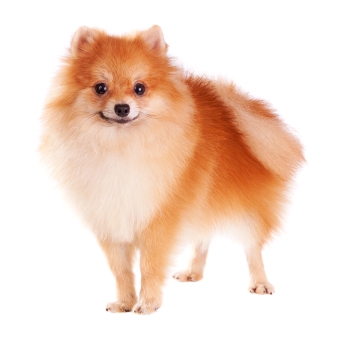
The Pomeranian is a small Spitz-type dog, but definitely not a working variety. He is suitable as a companion dog but only for those who are prepared to spend time grooming his abundant coat. The soft undercoat and coarser outer coat will need daily grooming to keep clean and tangle free. His character is typically sweet tempered and affectionate but by no means docile. He will adapt to any type of home environment. He needs regular exercise every day.
Genetic Diversity
(Known as Coefficient of Inbreeding: 'COI'. It should be as low as possible.)
The UK Kennel Club breed average COI is 5.6% - See 'A Beginners Guide to COI'
Gene Pool Size
(Known as Effective Population Size: 'EPS')
99.1
EPS is a measure of how many individuals are contributing genetically to a breed population. It is a measure of the size of the gene pool in a breed. Lower than 100 is considered critical by conservationists and below 50 brings a breed close to extinction. For more information see the Kennel Club article.
Health and Welfare Problems due to Conformation
(Body shape and physical characteristics)
The thick coat will get matted if not groomed daily and kept clean. Warm weather could also be a problem for this dog as would an overheated house. Care should be taken not to allow him to over heat.
This small and fragile dog is susceptible to bone fractures
BVA/KC Health Schemes: www.bva.co.uk/chs
- Chiari malformation/Syringomyelia (CMSM)
- Eye Disease
Estimated Breeding Values (EBVs) : No EBVs are currently available for this breed
www.thekennelclub.org.uk/about-ebvs
DNA Tests Available
DogWellNet and IPFD Harmonisation of Genetic Testing for Dogs (HGTD)
www.dogwellnet.com/breeds
Some DNA tests are available for rare diseases
Availability of a DNA test does not mean that it is always necessary or even desirable for breeders to use this test.
Other Breed-Specific Health Screening Schemes
- Putnam scoring for Patella luxation
Ask the breeder to show you the certificates for the above tests/screening for both parents. If any of the above tests have not been considered necessary by the breeder (and there may be good reasons), ask her to explain why.
Other Diseases Reported
(For which there are currently no genetic or screening tests for sire or dam)
- Distal fractures of radius and ulna
- Black skin disease (BSD) / Alopecia
- Insufficient closure of the fontanelle
- Mitral Valve Disease (MVD)
- Dental problems
Ask the breeder about the medical history of the parents, grandparents and great grandparents. Consider carefully whether to purchase a puppy if some of these or other diseases are in the family line.
Ask about the breeder’s policy in cases of serious genetic diseases occurring to your puppy in later life. Good breeders will request to be informed of such events in order to improve future breeding decisions.
You are strongly advised to buy from a breeder who uses (or is prepared to use) the AWF Puppy Contract and Puppy Information Pack (PIP): www.puppycontract.org.uk
The breeder should also be familiar with the CFSG/DBRG Code of Practice for Dog Breeding
Or the Kennel Club’s Assured Breeders Scheme Standard and Guidance:
Standard PDF | Guidance PDF